

Dermal Filler in Vancouver + Burnaby

Hyaluronic Acid Dermal Filler at Everwell

Over time, the fat pads, bone, skin and other structures that give the face its shape begin to change. The cheeks may feel a little flatter. The lower face a little heavier. A shadow appears where there wasn’t one before. Features that once felt balanced together can begin to relate differently.
Dermal filler gives us a way to work with those changes.
Hyaluronic acid filler can restore volume where it has been lost, support facial structure, soften transitions and refine proportions. It can also be used to enhance features such as the lips or chin when greater balance is the goal.
At Everwell, we don’t approach the face as a collection of individual areas to fill. We look at how everything relates.
What Dermal Filler Can Treat
Cheeks + Midface
Chin + Jawline
Lips
Under Eyes
Transition Zones
Facial Balancing

How Hyaluronic Acid Dermal Filler Works
Hyaluronic acid dermal fillers use a gel formulation that can be injected at different depths and in different areas to create volume, support structure, or soften transitions. Different filler products have different characteristics, allowing your practitioner to select what makes sense for the tissue and purpose being treated.
But good filler isn’t simply about putting volume where volume appears to be missing.
The face is interconnected.
A change through the midface can influence the appearance of the lower face. Chin projection can affect how the nose, lips and jawline relate. Supporting one area may soften the transition into another without directly filling the place that first caught your attention.
That’s why we assess the face as a whole before deciding where a syringe belongs. Or whether it belongs at all.
What to Expect from Dermal Filler
- Your appointment begins with a conversation about what you've noticed, what you would like to change and, just as importantly, what you want to preserve.
- Your practitioner will assess your face at rest and in motion, considering your anatomy, proportions, existing volume, symmetry, and how different features relate to one another. From there, we'll decide what actually needs treatment.
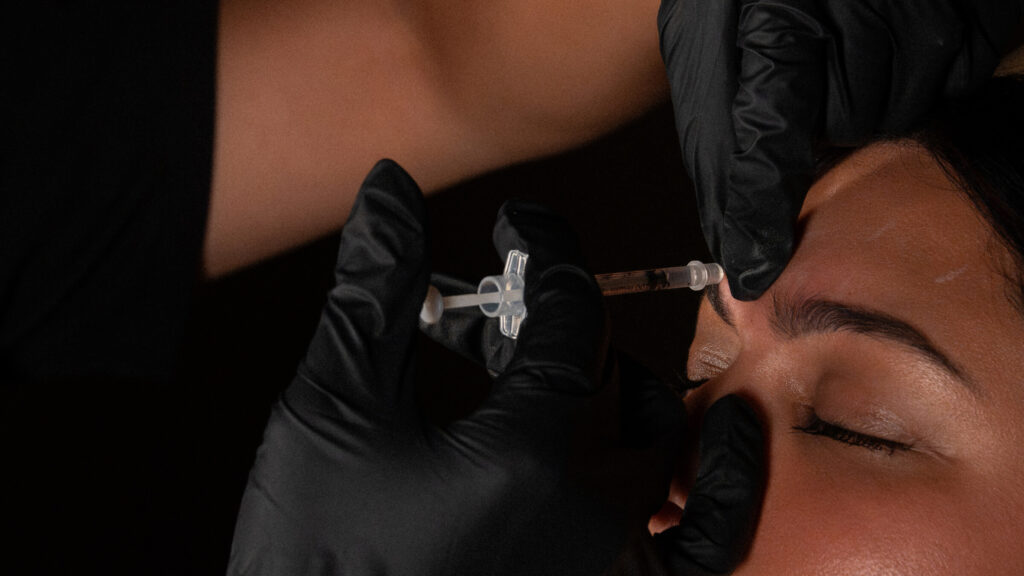
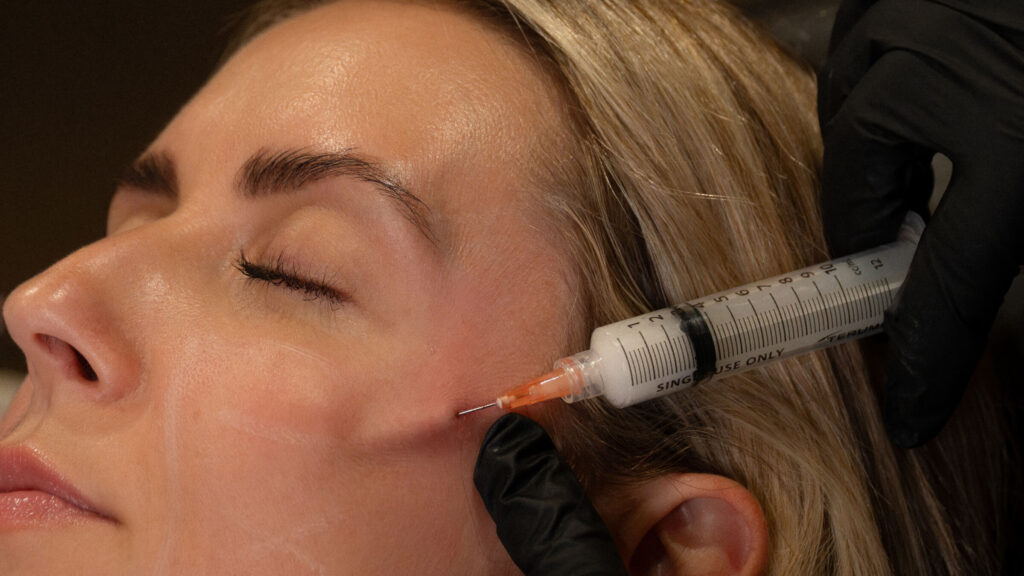
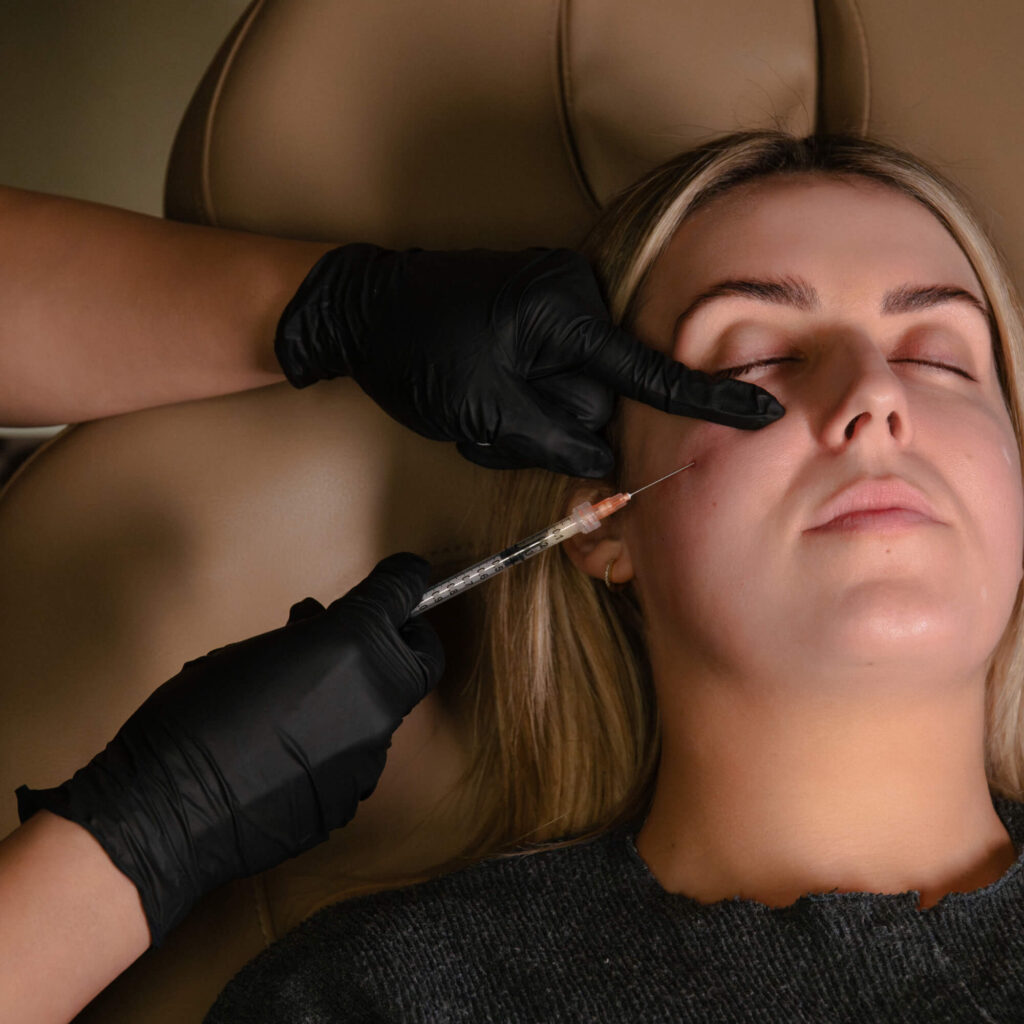
- The selected hyaluronic acid filler is then placed strategically using a needle or cannula depending on the area, product, and treatment plan.
- You may feel pressure, pinching or tenderness during treatment. Many hyaluronic acid fillers contain lidocaine, and additional comfort measures may be used when appropriate.
- Some changes are visible immediately, but what you see when you leave isn't your finished result. Swelling, particularly in areas such as the lips, can temporarily change the appearance of the treatment.
Dermal Filler Results
Results
Treatment Time
Discomfort
Recovery
How Results Develop
You’ll see a change immediately after dermal filler, but the result continues to evolve as initial swelling resolves and the product integrates within the treated tissues.
How Long They Last
Hyaluronic acid filler results typically last 6-18 months, depending on the product and treatment area. Individual anatomy, movement, amount used, and anatomy can all influence longevity. We don’t assume that every area needs to be refilled simply because time has passed.
Connected Aesthetic Care at Everwell

Botox + Wrinkle Relaxers
Sculptra + Biostimulators
NaturaGel PRP
Comprehensive Skin Analysis
Dermal Filler Pre + Post Care
Before
- 7 days beforeAvoid aspirin, ibuprofen (Advil or Motrin), high dose vitamin E, ginkgo biloba, and omega 3 or fish oil supplements.*
- 24-48 hours beforeAvoid alcohol to help reduce the risk of bruising.
- 2 weeks before and afterAvoid scheduling dental cleanings, dental procedures, or oral surgery to minimize the risk of infection.
- If you’re prone to cold soresLet your provider know before your appointment, particularly if you’re receiving lip filler. Preventative antiviral medication may be recommended.
- Plan aheadSchedule your treatment at least 2-3 weeks before any major events to allow time for potential swelling and bruising to resolve.
- Pregnancy and breastfeedingDermal filler treatments are not recommended during pregnancy or while breastfeeding.
After
- First 6 hoursAvoid touching the treated area or making exaggerated facial expressions. After this time, you may gently cleanse the area with soap and water.
- First 12–24 hoursAvoid applying makeup or harsh skincare products to the treated area to keep injection sites clean.
- First 48 hoursAvoid strenuous exercise, heavy lifting, saunas, hot tubs, and steam rooms.
- Until swelling and redness resolveAvoid intense sun exposure, extreme heat, and extreme cold. You may gently apply a cold compress for short periods to help relieve bruising or tenderness.
- Throughout recoveryAvoid rubbing, picking, massaging, or applying firm pressure to the treated areas unless specifically instructed by your provider.
What to Expect
The first few days
Mild redness, swelling, tenderness, itching, or bruising may occur immediately after treatment and typically begin to resolve within a few days.Lip swelling
Swelling after lip filler may last approximately one week, and temporary unevenness is normal as the product settles.Letting it settle
Results are visible immediately, but allow 2–4 weeks for swelling to resolve and filler to settle before making adjustments.
Dermal Filler FAQs
What is Dermal Filler?
Dermal filler is an injectable treatment used to restore or add volume, support facial structure, soften transitions and refine facial proportions. At Everwell, we primarily approach filler as a tool for creating balance rather than simply making individual features bigger.
What kind of dermal filler does Everwell use?
Everwell uses hyaluronic acid based dermal fillers. Hyaluronic acid is naturally present in the body and helps maintain hydration and volume within the skin.
Different filler formulations have different characteristics, and your practitioner will select a product based on the area being treated and what the filler needs to accomplish.
What areas can dermal filler treat?
Dermal filler can be used in areas including the lips, cheeks and midface, chin, jawline, nasolabial folds, marionette lines, and carefully selected under eye concerns.
What can be treated doesn’t necessarily tell us what should be treated. Your individual anatomy determines where filler makes sense.
What’s the difference between filler and Sculptra?
Hyaluronic acid filler places gel into targeted areas to create or restore volume and structural support. Sculptra is a biostimulatory injectable that works differently, stimulating your body to gradually produce collagen over time.
Depending on your face and goals, one may make more sense than the other, or they may have different roles within the same longer term plan.
Will filler make me look overdone?
That isn’t the intention. Filler itself doesn’t determine whether a result looks natural. Product selection, placement, amount, anatomy, and the treatment plan all matter.
Everwell’s approach is to use filler selectively, preserving the proportions, movement and characteristics that make your face recognizable as yours.
How much filler will I need?
There isn’t a standard number of syringes for a particular face. The amount depends on your anatomy, the area being treated, your existing volume, your goals, and whether we’re making a small refinement or addressing more significant structural change.
Your practitioner will build the plan around your face rather than a predetermined package.
How long does dermal filler last?
Hyaluronic acid fillers generally last approximately 6–18 months, depending on the product and treatment area. Longevity can also vary based on factors such as metabolism, facial movement, amount injected and individual response.
Is dermal filler reversible?
One advantage of hyaluronic acid filler is that it can be dissolved using an enzyme called hyaluronidase when clinically appropriate. That doesn’t mean filler should be approached casually. Dissolving is still a medical treatment with its own considerations.
Can filler migrate?
Filler can sometimes be found outside the precise area where it was originally intended to sit. Factors including anatomy, product, placement, amount, movement and previous treatment history can all matter.
This is another reason we take a conservative, long term approach to how much filler is placed and how frequently it is repeated.